The Essential Portugal Beach Guide
Loyd Rozzo
Owner of Siesta Campers

Portugal has around 1,700 kilometres of coastline, and most visitors only ever see a few crowded stretches of it. At Siesta Campers, we’ve spent nearly three decades exploring this coast in restored VW vans, from the granite coves of the far north to the sandbar islands of the eastern Algarve. These are the best beaches in Portugal that we keep coming back to. They’re wild, a little out of the way, and each one is worth the drive.
This isn’t a list of the most famous sand in the country. It’s five beaches from five very different stretches of coast, chosen for how they feel rather than how often they appear on postcards. Each one comes with practical notes on getting there, the nearest Siesta base and where to sleep nearby.
Portugal’s best beaches at a glance
- Praia do Paçô (North, Viana do Castelo): about 1 hour from our Porto base, best for rock pools and families
- Galapinhos (Arrábida, Setúbal): about 1 hour from Lisbon, best for clear, calm water
- Samouqueira (Alentejo coast): about 2 hours from Lisbon, best for caves and clifftop walks
- Bordeira (West Algarve): about 1.5 hours from Faro, best for surf and big, wild skies
- Barril (East Algarve): about 40 minutes from Faro, best for easy beach days and history
The green north
1. Praia do Paçô (Forte do Paço), Viana do Castelo
Head an hour north of Porto, past Viana do Castelo, and the coast turns quieter and greener. Praia do Paçô, which locals call Praia do Forte, sits below wooded hills near the village of Carreço. It’s the kind of Portugal beach holiday most people never find: no high-rises, no rows of sunloungers, just granite, sand and the Atlantic.
At low tide, shallow pools form between the boulders and warm up in the sun, making natural paddling pools for little ones. The ruins of an old coastal fort stand above the sand, giving small pirates a hideaway while you finish your coffee.
There isn’t much in the way of facilities, and that’s part of the appeal. If you need a café or showers, Praia de Carreço is a short walk along the coast. If you’d rather stay closer to the city, our guide to the best beaches in Porto covers the easy-access options.
Good to know
- Best for: families, rock pooling, quiet days
- Water: Atlantic and bracing, even in August
- Facilities: minimal at Paçô, more at Praia de Carreço next door
- Overnight: Parque de Campismo do Paço in Vila Praia de Âncora, open mid-April to the end of September
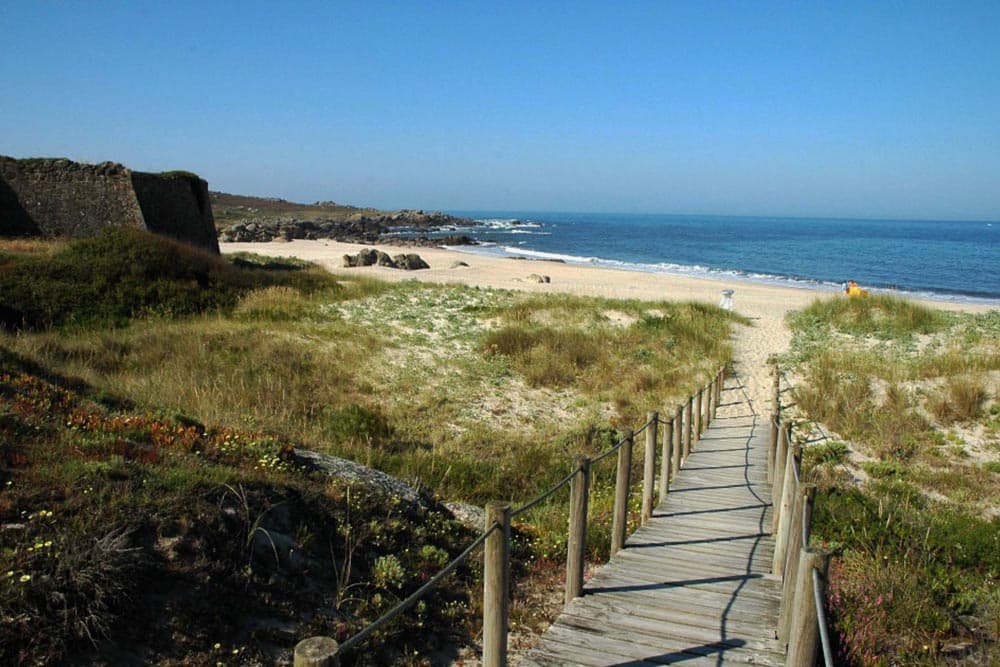
Forte do Paço beach near Porto
Arrábida and the Setúbal coast
2. Galapinhos, Arrábida Natural Park
Galapinhos is often called the most beautiful beach in Portugal, and it’s easy to see why. It sits in the Arrábida Natural Park near Setúbal, beneath steep green slopes that drop straight into a deep turquoise sea. In 2017, it was voted Europe’s best beach. The water is clear and calm, though colder than it looks.
The catch is getting there. During the bathing season, which runs roughly from June to mid-September, private cars can’t use the beach access roads during the day. The coastal road from Setúbal past Figueirinha has also been closed for several years because of rockfall risk. Come in from the Azeitão side, park outside the restricted zone, and catch one of the local buses or walk the last stretch. It’s slower, but it’s part of what keeps Arrábida so special.
If you’re based in the capital and want more options, our guide to Lisbon beaches you cannot miss covers Galapinhos alongside Guincho, Adraga and Meco. For the fishing town on Arrábida’s western edge, see Sesimbra in our best beach towns in Portugal guide.
Good to know
- Best for: swimming, snorkelling, photos you won’t need to filter
- Getting there: in summer, take the bus from Setúbal or Azeitão, as cars are restricted during the day
- Best time: September, after the crowds and once the road restrictions end
- Overnight: sleeping in your van inside the natural park isn’t allowed, so stay at a campsite outside the park and come in early
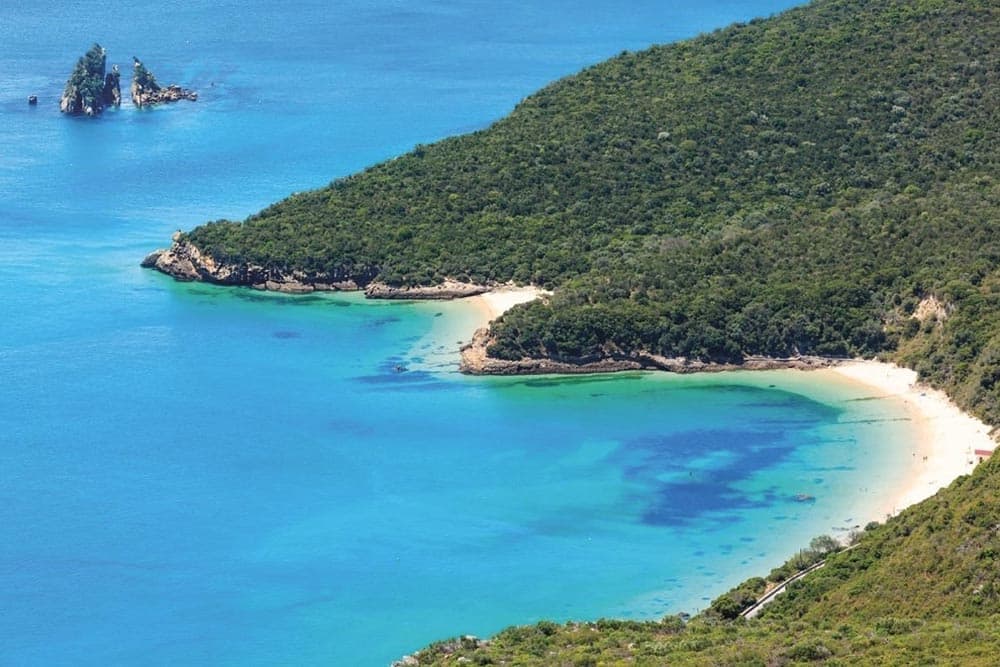
Galapinhos beach near Lisbon
The wild Alentejo coast
3. Samouqueira, Porto Covo
The Alentejo sits between Lisbon and the Algarve. It’s Portugal’s largest region and one of its least crowded: rolling hills, cork oaks and whitewashed villages that empty out after dark. Its coastline is one of the country’s best-kept secrets.
Just north of Porto Covo, Samouqueira is a small, rugged beach full of rock formations and sea caves. Arrive at low tide and you can explore the caves on foot. A clifftop loop from the village passes Samouqueira and a string of smaller coves along the way, which makes a good half-day walk. The whole stretch lies within the Southwest Alentejo and Vicentine Coast Natural Park, so expect few facilities, plenty of birdlife and sunsets worth staying up for.
Porto Covo itself is a lovely base, with whitewashed houses gathered around a cobbled square. We cover the village in more detail in our best beach towns in Portugal guide.
Good to know
- Best for: exploring at low tide, coastal walks, sunsets
- Tip: check the tide times before you go, as the caves are only reachable at low tide
- Facilities: none on the beach, so pick up supplies in Porto Covo
- Overnight: Parque de Campismo da Ilha do Pessegueiro, a long-running eco-minded campsite facing Pessegueiro Island
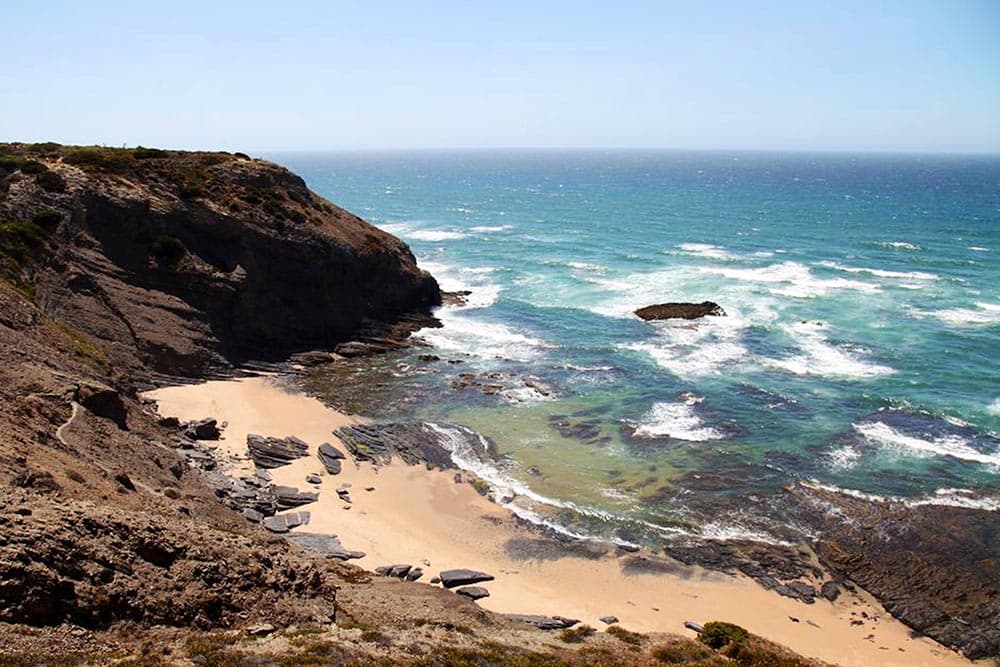
Samoqueira beach in Alentejo
The Algarve’s wild west and quiet east
4. Bordeira, Carrapateira
This is our favourite. Surfers talk about Bordeira with something close to reverence, yet most other visitors drive straight past. Head for the sleepy village of Carrapateira, a short drive from Aljezur or Vila do Bispo, and follow the road towards the sea.
What you’ll find is three kilometres of golden sand backed by tall dunes and limestone cliffs, with a river winding through the middle. At high tide, the river forms a shallow lagoon that warms up nicely, which is perfect for kids while the surfers take on the bigger waves out back. A clifftop road loops around the headland, with plenty of places to stop and watch the light change over the Atlantic.
If you’re coming to learn, neighbouring Praia do Amado is one of our top beaches to learn to surf in Portugal. Bordeira sits inside the Vicentine Coast Natural Park, so however tempting that clifftop sunset is, you can’t stay overnight there. Watch the sun go down, then head to a campsite.
Good to know
- Best for: surfing, long walks, big, wild landscapes
- Kids: the river lagoon is calm and shallow at high tide
- Also nearby: Praia do Amado, just to the south, for beginner-friendly surf
- Overnight: Orbitur Sagres campsite, a short drive south
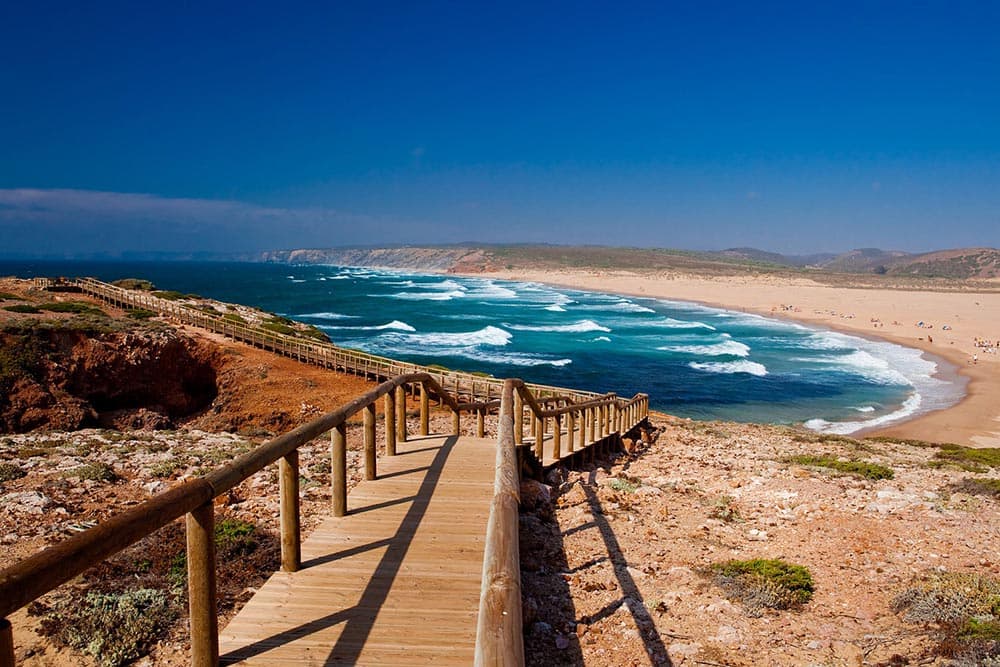
Bordeira beach
5. Barril, Ilha de Tavira
Barril is the easy-going counterpart to Bordeira. It sits on Ilha de Tavira, a long sandbar island in the Ria Formosa Natural Park, about 40 minutes’ drive from our Faro base. That also puts it close to our home in São Brás de Alportel, so we know it well.
Park at Pedras d’El Rei and cross the footbridge over the salt marsh. From there, you can walk to the sand or take the little beach train, which kids love. On the other side, a huge stretch of soft white sand and calm water is waiting for you.
Barril was once a tuna fishing village, and the fishermen’s old anchors now stand in rows among the dunes. Known as the anchor cemetery, it’s one of the most striking sights on the coast. The old fishermen’s cottages have become cafés. Walk further along the sand and you’ll reach a naturist section, if you’re so inclined.
Barril is one of eight picks in our guide to the best beaches in the Algarve. If the wind picks up, the flat lagoon at nearby Fuseta is one of the best spots for kite surfing in Portugal.
Good to know
- Best for: families, calm water, an easy beach day
- Getting there: park at Pedras d’El Rei, then walk or take the train
- Facilities: cafés, showers and a Blue Flag beach
- Overnight: there’s no accommodation on the island, but Camping Ria Formosa in Cabanas de Tavira is close by
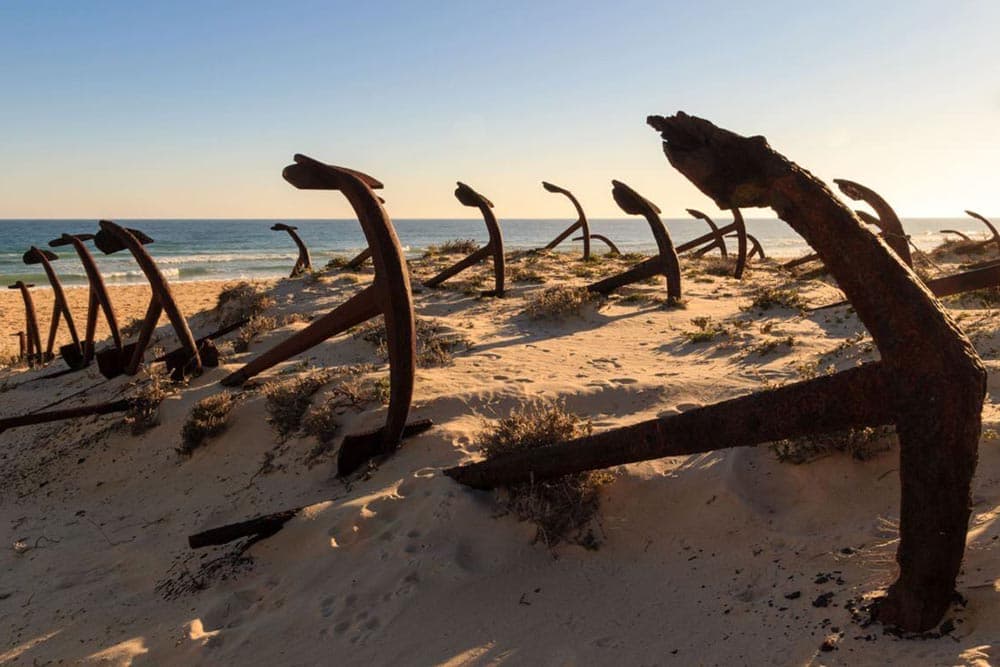
Barril beach anchor graveyard
When to visit Portugal’s best beaches
July and August bring the warmest weather and the biggest crowds. For a slower trip, we’d point you towards September. The sea has had all summer to warm up, the roads are quieter, and places like Arrábida are easier to reach once the summer restrictions lift.
Spring is lovely for walking and wildflowers, but bring a wetsuit if you plan to swim. As a rule, the south coast of the Algarve is warmer and calmer than the wild west coast, while the north stays fresh all year.
FAQs
What is the best beach in Portugal?
It depends on what you’re after. For wild scenery and surf, our pick is Bordeira in the west Algarve. For clear, calm water, it’s Galapinhos in Arrábida. For an easy family day, Barril and Praia do Paçô are both great choices.
What is the most beautiful beach in Portugal?
Galapinhos is the one most often named, and it was voted Europe’s best beach in 2017. For something wilder and emptier, we’d put Bordeira right alongside it.
Can you sleep on the beach in a campervan in Portugal?
No. Overnight stays are banned in protected and coastal zones unless a spot is authorised, and most beaches fall within those zones. Stay at campsites or official motorhome areas instead.
Which Portuguese beaches are best for families?
Praia do Paçô has rock pools, Barril has its little beach train, and the river lagoon at Bordeira is calm at high tide. All three make easy days out with kids.
Start your beach road trip with Siesta Campers
The best beaches in Portugal are spread right along the coast, and the best way to reach them is slowly, with your home on wheels. Collect a van from our Porto, Lisbon or Faro base, and our team will mark up your map with their favourite park-ups, cafés and quiet coves.
Browse our campervans and start planning. The sand will still be there when you arrive.